

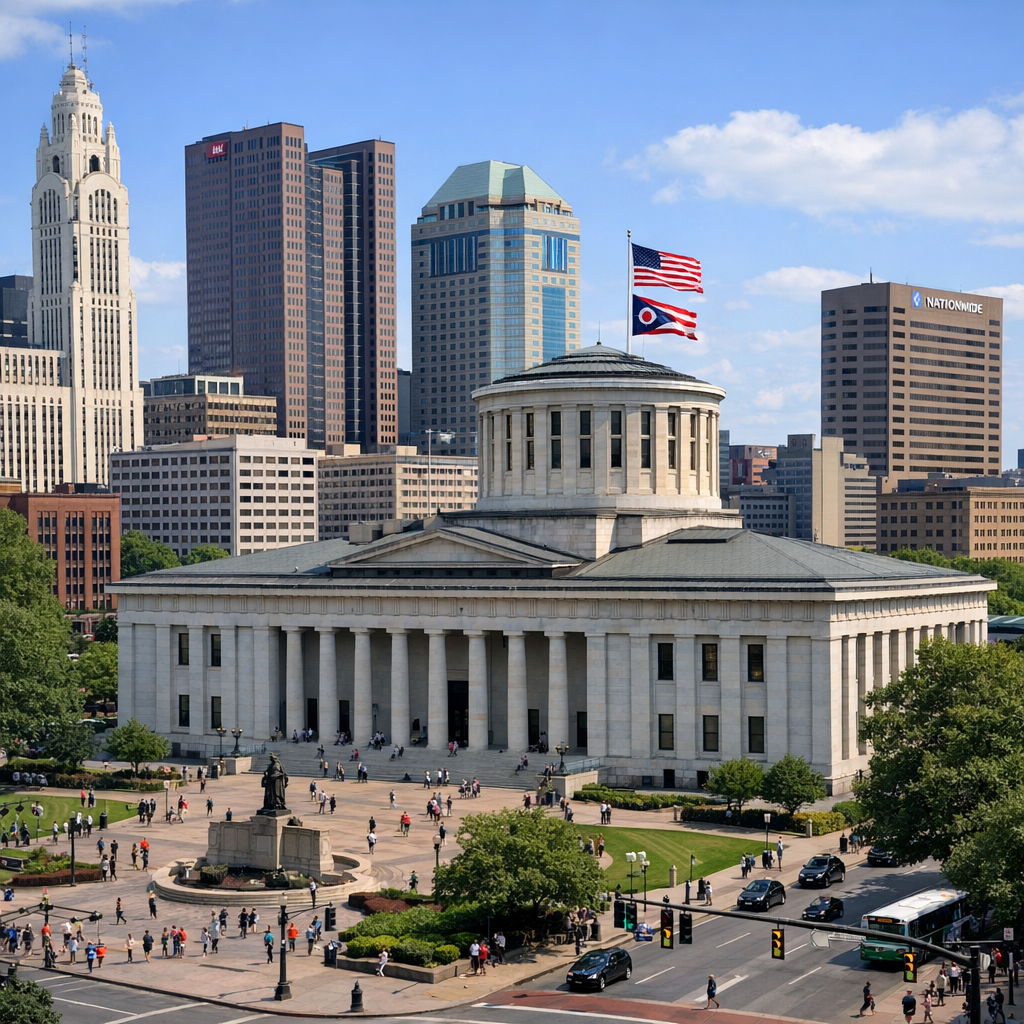
Ohio has long been recognized as a bellwether state in U.S. politics, often mirroring national election outcomes. Since 1896, Ohio has voted for the winning presidential candidate in 34 of the 39 elections held, underscoring its pivotal role in shaping the nation’s political landscape. Notably, no Republican has ever won the presidency without securing Ohio’s electoral votes.
In recent years, Ohio’s political dynamics have evolved. The state has leaned more conservative, with Republicans holding the governorship and majorities in both the Ohio State Senate and House of Representatives. This shift reflects broader national trends and highlights Ohio’s ongoing influence in federal politics.
Economically, Ohio remains a powerhouse. As the seventh-largest GDP-producing state, its manufacturing and agricultural sectors have been foundational to its prosperity. Even as industries evolve, legacy cities and regions within Ohio continue to play a crucial role in driving economic growth.
However, challenges persist. The state’s agricultural sector, a $124 billion industry supporting one in eight jobs, faces financial pressures reminiscent of the 1980s farm crisis. Rising operational costs are squeezing profits across Ohio’s 75,000 farms, impacting both local economies and food prices.
Additionally, Ohio’s manufacturing sector is navigating the complexities of international trade policies. Tariffs have significantly impacted this critical component of the state’s economy, contributing over 17% to its GDP. A recent report revealed that one-third of Ohio manufacturers have experienced effects on their sales due to tariffs, with average losses outweighing gains.
Despite these challenges, Ohio’s commitment to economic diversification is evident. The outdoor recreation sector, for instance, generated $20 billion in 2024, accounting for 2.2% of the state’s GDP. This growth reflects deliberate state investments and underscores the importance of outdoor activities to Ohio’s economy.
As Ohio continues to navigate its political and economic landscape, its role in national affairs remains significant. The state’s ability to adapt and address challenges will be crucial in maintaining its influence and prosperity in the years to come.