

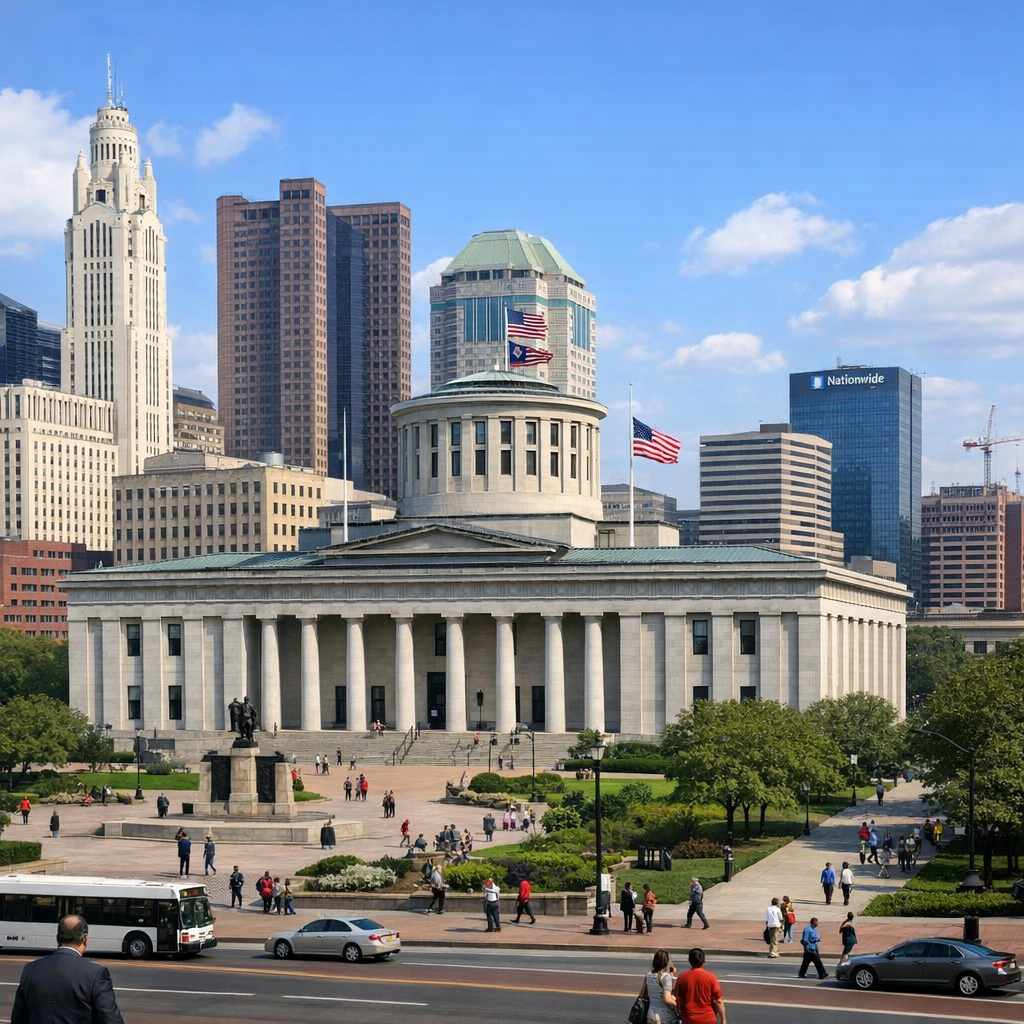
Ohio has long been recognized as a bellwether state in U.S. presidential elections. Since 1896, Ohio has voted for the winning presidential candidate in 45 out of 55 elections, achieving an 82% success rate. This track record underscores Ohio’s critical role in national politics. Notably, no Republican has ever won the presidency without securing Ohio’s electoral votes. 1
In the 2024 presidential election, Ohio continued this trend by supporting the Republican candidate, Donald Trump, who won the state by an 11.21% margin—the widest since 1984. This outcome reflects Ohio’s ongoing influence in determining national leadership. 2
Beyond politics, Ohio’s economic contributions are substantial. The state ranks seventh in the nation for Gross Domestic Product (GDP), largely due to its robust manufacturing and agricultural sectors. These industries have been the backbone of Ohio’s economy for decades, with manufacturing alone accounting for over 17% of the state’s GDP. 3
However, recent developments have presented challenges. The manufacturing sector has faced disruptions due to tariffs, with one-third of Ohio manufacturers reporting impacts on sales. Average losses have outweighed gains, particularly affecting companies producing proprietary products. Despite these challenges, 66% of manufacturers remain optimistic about growth through new markets and clearer trade policies. 4
Similarly, the agricultural sector is experiencing financial pressures reminiscent of the 1980s farm crisis. Rising operational costs are squeezing profits across Ohio’s 75,000 farms, despite higher market prices. This strain is expected to impact food prices and local economies. 5
In response to these economic shifts, Ohio has invested nearly $300 million in state parks in the 2025–26 capital budget, aiming to bolster the outdoor recreation sector. This investment reflects a strategic effort to diversify the state’s economy and capitalize on its natural resources. 6
As Ohio continues to navigate its role in national politics and the economy, its actions and policies will undoubtedly influence broader national trends. The state’s ability to adapt to changing economic landscapes while maintaining its political significance underscores its enduring impact on the nation.