

By Mia Anderson
Columbus is still growing fast — jobs, families, and development are pushing its housing market to evolve in ways that matter for homebuyers, renters, and anyone watching local growth. Here’s what’s changing, and how to make sense of it.
Price Trends and Buyer’s Edge
Over the past year, home sale prices in Columbus have ticked up modestly — around 0.5%–1% depending on the neighborhood — while listing prices have softened slightly. During mid-2026, the median sale price hovered around $300,000, with homes spending roughly 40–45 days on the market. Buyers are no longer rushed into decisions as inventory continues to rebuild. Raleigh County and Central Ohio MLS data show more listings and sales — and that gives buyers extra leverage when pricing and negotiations come into play.
Rentals: Some Relief After Sharp Increase
Rents in Columbus remain relatively high, but recent months have brought small drops in median rents, especially compared to prior upswing years. For many renters this means a little breathing room — though cost burdens remain high for low- and middle-income households. While new multifamily units are coming online, demand still stretches affordability in many neighborhoods, especially when factoring in commuting or utility costs.
Where Development is Shifting
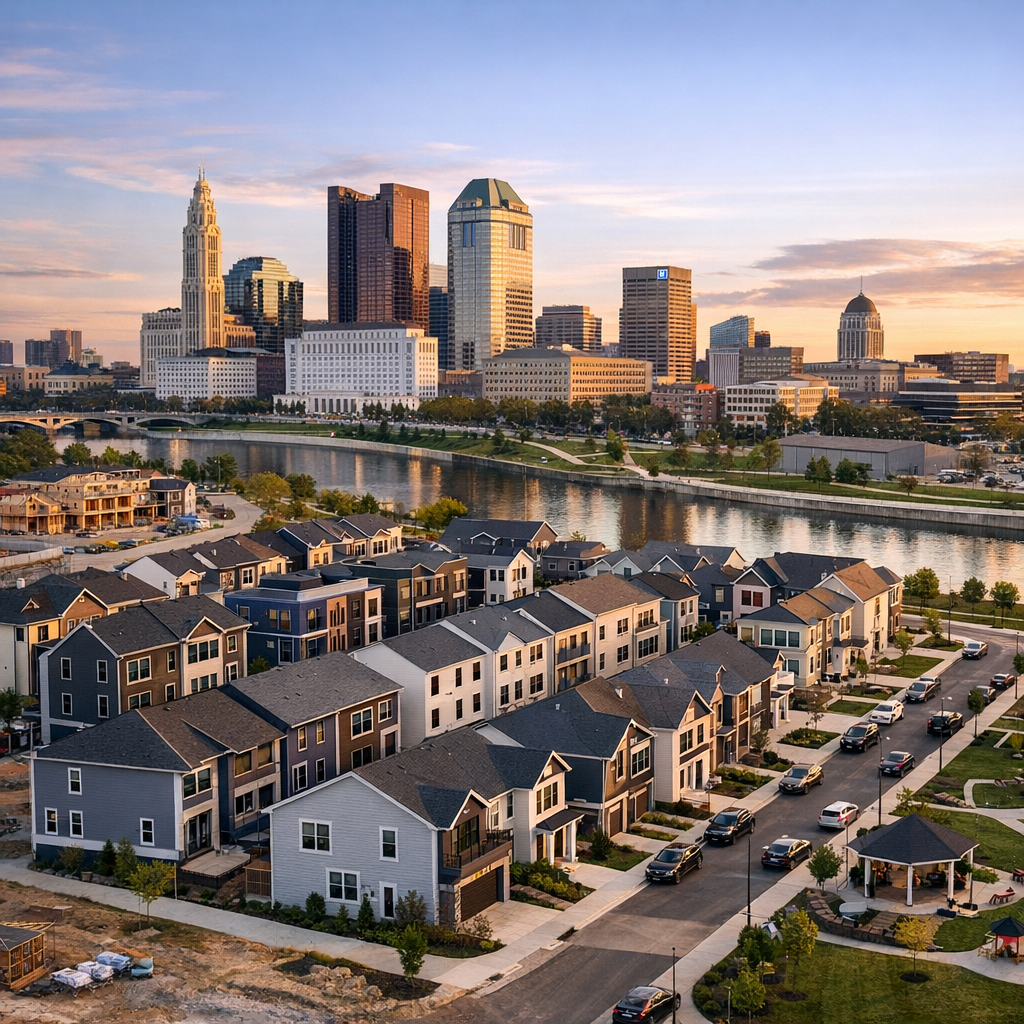
Development is following demand: suburbs and edge neighborhoods are seeing more supply, including new multifamily buildings and mixed-use projects. Projects like those in Upper Arlington and Delaware County account for a large share of recent construction completions. Within the city, downtown is also seeing sizable residential growth with market-rate and affordable units in the pipeline, bringing both opportunity and challenges around infrastructure, public space, and access.
Affordability Challenges, Especially for First-Timers
Even with these shifts, affordability remains a concern. Median home values are significantly higher than pre-pandemic levels, and incomes for many haven’t kept pace with housing cost rises or mortgage rate changes. Lower-income areas in denser parts of the city have seen the steepest declines in affordability. First-time homebuyers in particular report obstacles with down payments, credit, and competing with buyers who offer more favorable terms.
What to Watch If You’re Buying or Renting Now
- Shop in suburbs or neighborhoods on the edge of the core: greater construction in those areas often means more inventory or value for money.
- Pay attention to days on market as a signal — longer waits usually mean less competition, more room to negotiate.
- Compare new builds vs. existing homes carefully; new construction often carries premium pricing and fees not reflected in older homes.
- If renting, always include commuting and utility costs into your monthly budget; those hidden costs still push many households past what feels affordable.
Outlook for Developers and Community Leaders
To meet demand, more housing is needed — particularly affordable units. Zoning, infrastructure, and public policy around density will play a key role. Commitments like affordable housing bonds and incentives matter, but so do community engagement and balancing growth with services. Projects in transit-oriented areas and underused commercial zones may offer high impact if planned thoughtfully.
Columbus’s housing market is moving closer to balance — but the tensions between affordability, supply, and demand show no signs of disappearing anytime soon. Whether you’re renting, buying, or building, the key is staying informed and ready.