

Columbus, Ohio, is taking significant strides toward sustainability and environmental stewardship. The city’s updated Climate Action Plan aims to reduce greenhouse gas emissions by 45% by 2030 and achieve carbon neutrality by 2050. This comprehensive plan addresses key areas such as energy efficiency, waste reduction, transportation, and natural resource protection. Source
Community-Led Environmental Efforts
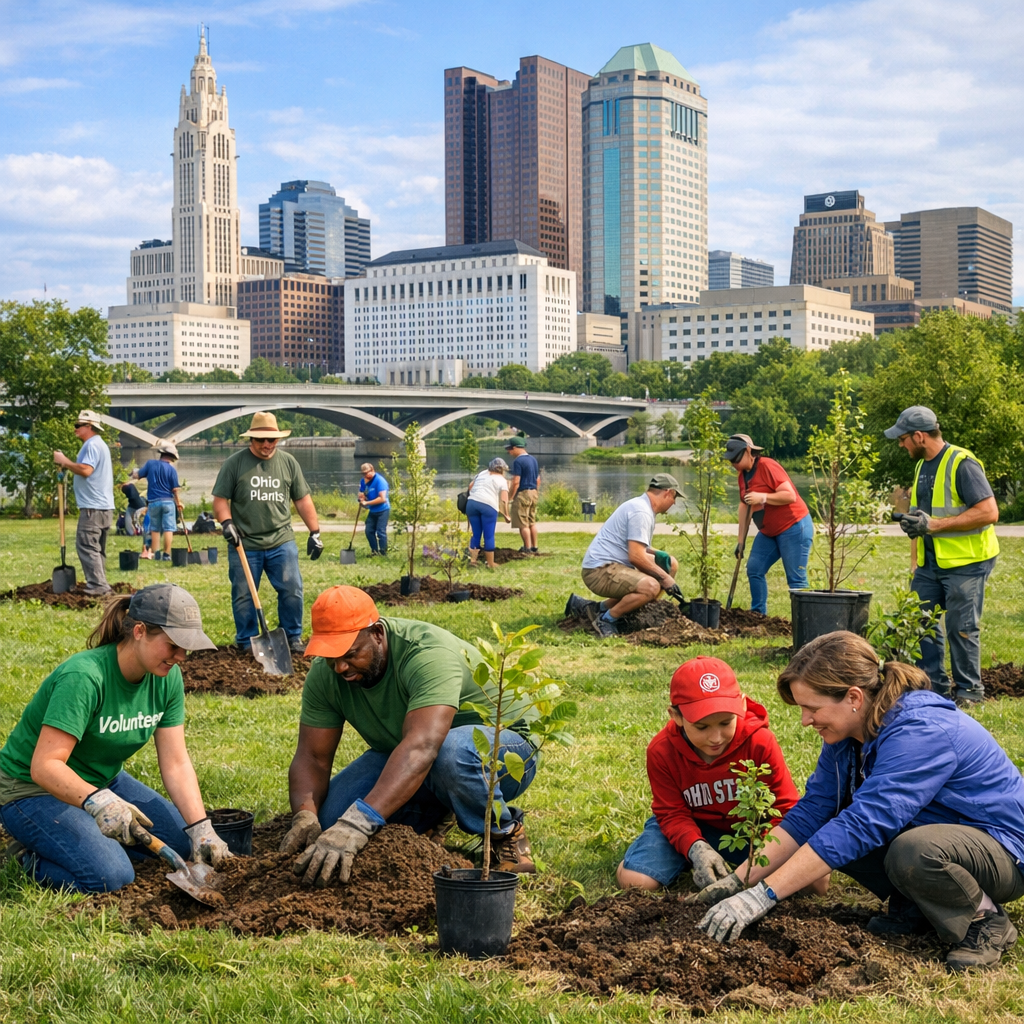
Local organizations are playing a pivotal role in supporting Columbus’ environmental goals. Green Columbus, a volunteer-driven nonprofit, has been instrumental in increasing the city’s tree canopy. Since 2007, the organization has facilitated the planting of over 300,000 trees, enhancing urban green spaces and improving air quality. Their programs include community tree plantings and educational events aimed at fostering a culture of sustainability. Source
Advancements in Recycling and Waste Management
In 2024, Columbus unveiled the Rumpke Recycling & Resource Center, the largest and most technologically advanced recycling facility in North America. This AI-powered center processes up to 500 million pounds of recyclables annually, significantly improving the efficiency and effectiveness of waste management in the region. The facility also features an interactive education center developed in collaboration with Ohio State University and COSI, aiming to educate residents on proper recycling practices. Source
Addressing Climate Change Impacts
Climate change is already affecting Central Ohio, with Columbus experiencing record-breaking heat waves, increased rainfall intensity, and longer allergy seasons. In response, the city is implementing measures to mitigate these impacts, including enhancing urban forestry, improving stormwater management, and promoting sustainable transportation options. Source
Through a combination of strategic planning and community engagement, Columbus is demonstrating a strong commitment to building a sustainable and resilient future for all residents.