

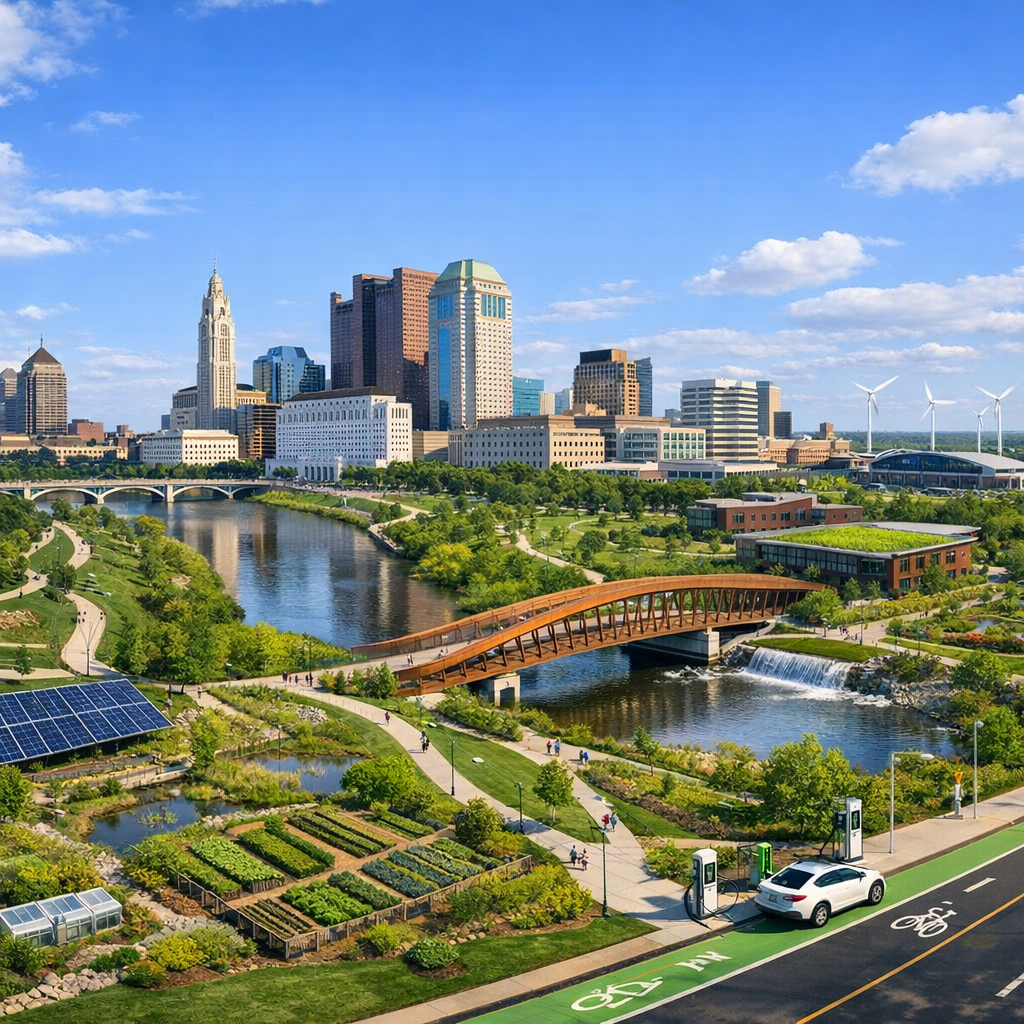
Columbus, Ohio, experiences a humid continental climate characterized by hot, humid summers and cold winters. This climate classification, known as Dfa, entails average temperatures above 72°F (22°C) during the warmest months and below 32°F (0°C) during the coldest. The city falls within USDA hardiness zone 6a, indicating that local flora and fauna are adapted to these conditions.
In response to environmental challenges, Columbus has implemented several initiatives to promote sustainability and resilience. The Columbus Climate Action Plan, established in 2021 and updated in 2025, outlines the city’s commitment to reducing greenhouse gas emissions by 45% by 2030 and achieving carbon neutrality by 2050. This plan serves as a roadmap for environmental justice and sustainable development.
Columbus Water & Power has embraced the One Water philosophy, managing all water resources holistically to support the community and environment. Efforts include protecting drinking water sources through integrated watershed management, expanding green infrastructure, and investing in renewable energy projects like solar power installations.
Community engagement plays a vital role in these initiatives. Organizations like Green Columbus have been instrumental in increasing tree coverage across the city. Since 2007, over 300,000 trees have been planted, contributing to improved air quality and urban aesthetics.
These concerted efforts reflect Columbus’ dedication to fostering a sustainable and resilient environment for current and future generations.