

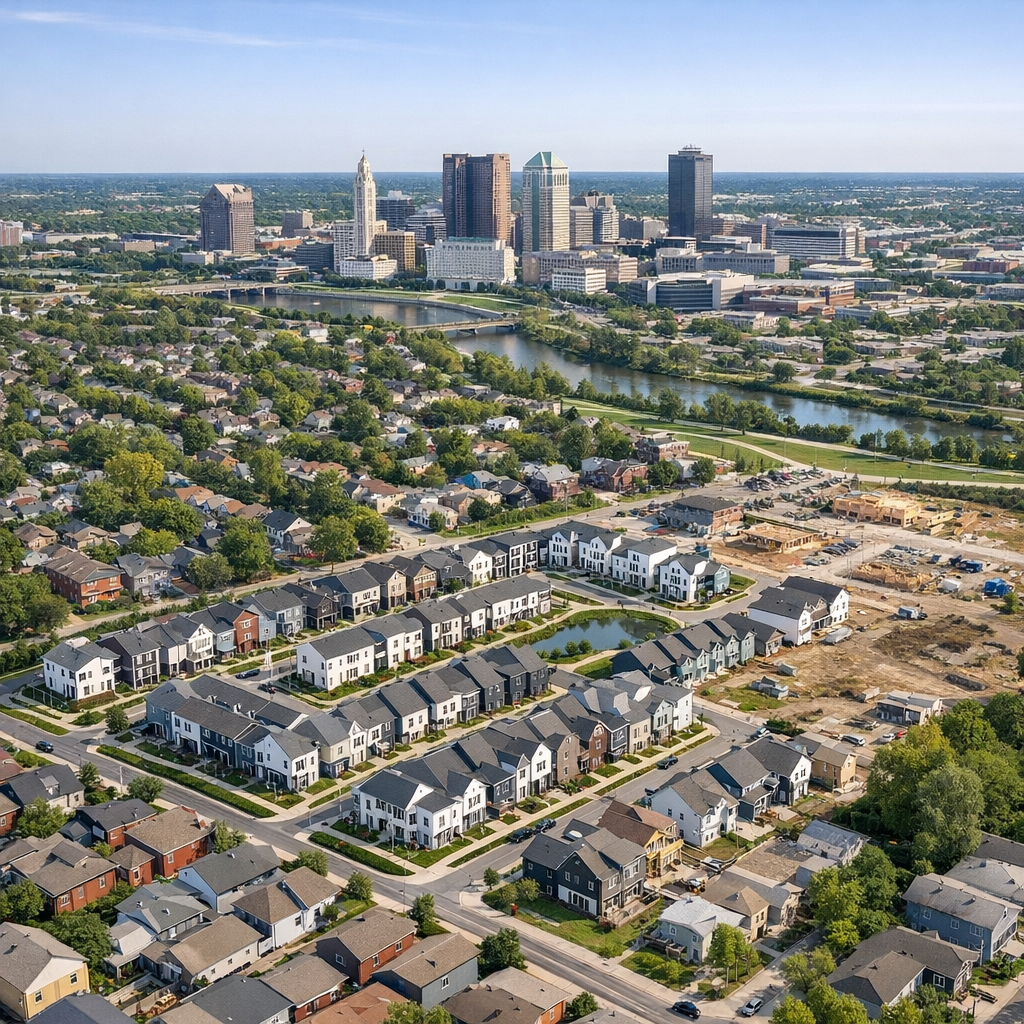
Columbus’s housing market is experiencing notable shifts, with trends in home prices, rental rates, and new developments shaping the landscape for residents and investors alike.
Home Prices and Sales Trends
As of March 2026, the median sale price of homes in Columbus reached $290,000, marking a 3.9% increase from the previous year. Homes are spending an average of 47 days on the market, slightly longer than the 43 days observed last year. This suggests a market that, while still active, is allowing buyers more time for decision-making. Additionally, the number of homes sold in March rose to 791, up from 782 in the same month last year, indicating sustained demand.
Rental Market Dynamics
The rental market in Columbus remains competitive. The average rent as of March 2026 stands at $1,445, which is below the national average of $1,910. This affordability continues to attract renters to the area. Notably, the rental market has seen a 1.4% year-over-year increase, reflecting steady demand.
Suburban Shift in Home Sales
Recent data indicates a shift in home sales from urban Columbus to suburban areas. In early 2026, Franklin County experienced a 4.6% decrease in home closings compared to the previous year, with homes staying on the market nearly 19% longer. This trend suggests a growing preference for suburban living, possibly driven by factors such as affordability and space.
Affordable Housing Initiatives
To address housing affordability, the City of Columbus has launched several initiatives. The Homeownership Development Program (HDP) aims to redevelop residential properties for sale or short-term lease purchase, providing development and affordability gap financing up to $60,000 per unit. This program encourages the construction and rehabilitation of quality homes available at affordable prices for income-qualified buyers.
Additionally, the city has planned nine affordable housing development projects, aiming to rehabilitate or construct 511 affordable housing units by the end of 2024. These projects target various populations, including seniors and families, and include a new permanent supportive housing development with 44 units.
New Developments and Community Investments
Columbus is also investing in community infrastructure to enhance the quality of life for its residents. The Kilbourne Run Sports Park in Northland is undergoing a $40 million redevelopment to become a premier soccer hub by 2026. The project includes six full-size artificial turf fields, eight smaller natural turf fields, new playgrounds, shelters, and improved drainage systems. This transformation aims to position Columbus as a regional leader in club soccer, providing economic and recreational benefits to the community.
In the Franklinton neighborhood, the Warner Junction project is developing 50 units of affordable housing for low-income families. This multi-site development offers a mix of one-, two-, and three-bedroom apartments, featuring amenities such as on-site community space, a leasing office, a fitness room, and healthcare space. The project addresses the critical need for affordable housing in the area.
Conclusion
Columbus’s housing market is characterized by rising home prices, a competitive rental landscape, and significant investments in affordable housing and community infrastructure. These developments reflect the city’s commitment to accommodating its growing population and enhancing the quality of life for its residents.